Map the customer journey you actually run
A five-page worksheet for you and your team. Six stages, three questions each, and four kinds of channel to sort them into. Free, and in your inbox in a minute.
Most journeys are designed by accident
Every business has a customer journey, whether or not anyone drew it. People hear of you, weigh you up, buy, come back or drift away. The worksheet makes you write down what happens at each of those stages today: the channels you use, the work you do there, and the numbers you watch. The gaps show up on the page, usually at the stage nobody owns.
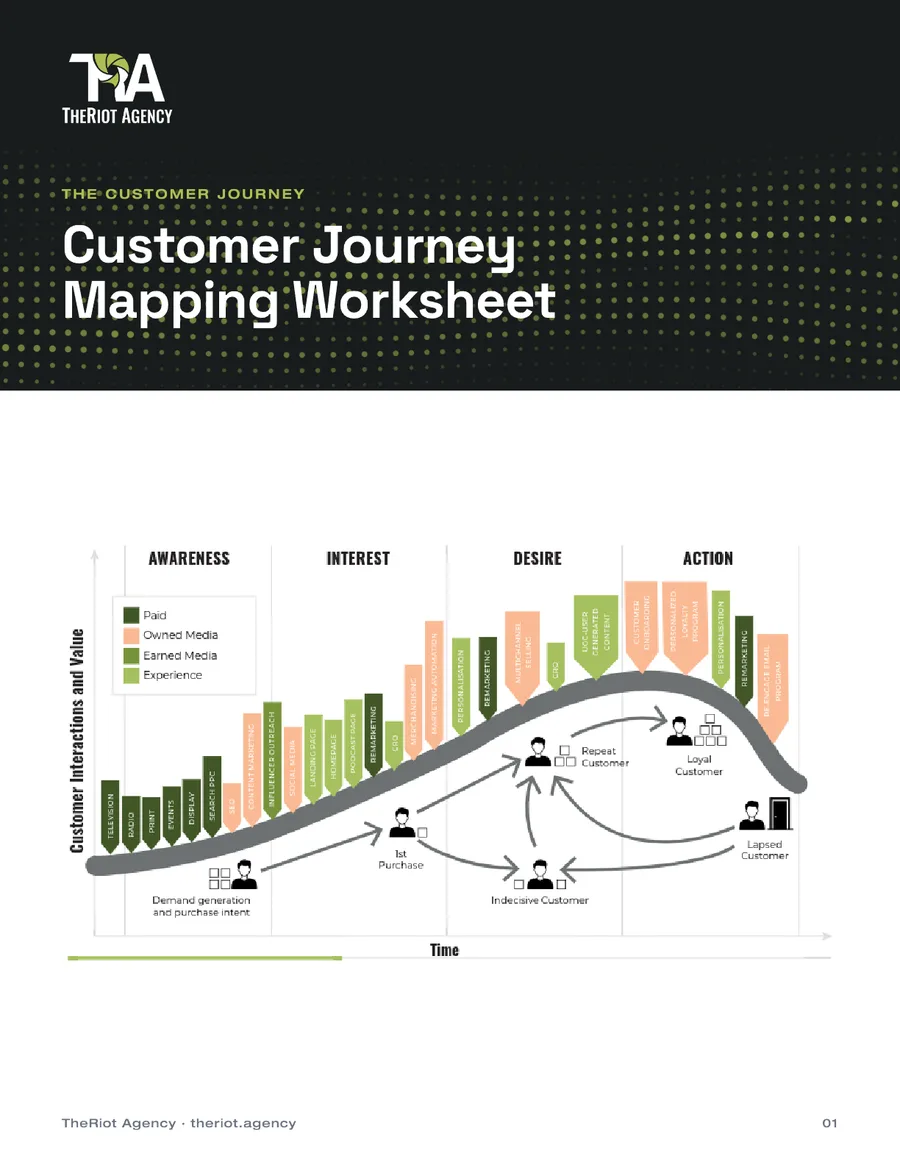
Six stages, three questions each
For every stage: which channels, what you do there, and whether you measure it.
01 · Awareness
Where demand starts. The channels that put your brand in front of people who have never heard of you.
02 · Interest
How you nurture curiosity and give a prospect the information they came looking for.
03 · Desire
What moves a prospect from interest to intent: proof, comparison and the case for you.
04 · Action
The steps that turn intent into a purchase or a signed commitment, and what gets in the way.
05 · Loyalty and retention
How you keep the customers you have and earn the next order without starting over.
06 · Reactivation
How you win back the customers who drifted away, and whether anyone is trying.
Sort every channel into one of four kinds
- Paid media: ads, paid social and pay-per-click
- Owned media: your website, blog, email and social profiles
- Earned media: reviews, press, referrals and organic search
- Experience: events, demos, webinars and every service conversation
Get the worksheet
Tell us where to send it and the worksheet lands in your inbox. No follow-up you did not ask for.
Rather have a score?
The assessment is the same six stages with fixed answers, so it scores. Ten minutes, a score for every stage, and the one to fix first.